

Cabling is the part nobody sees and the part everything depends on. Done right, it lasts for decades and costs almost nothing to maintain. Done wrong, it limits every device the property tries to run for the next twenty years. We plan and install structured cabling for new builds, restorations and retrofits, working with the architect, builder and stonemason so nothing is on show.
WHAT WE DELIVER
Honest, hands-on, and built to last.

Cat6a, fibre and coax
We specify the cable to suit the run and the future. 10Gb-capable copper and single-mode fibre on the longer routes.

Planned with the build
First-fix on time and routed around joists, conservation features and listed details. No retro-fitted surface conduit if we can help it.

Tested, terminated, labelled
Every run tested to spec, every patch panel labelled, every drawing handed over so the next trade knows what is where.

Cabinets that breathe
Server cupboards designed for airflow, power and access, so the rack stays serviceable rather than buried in a hot understair.
The cable you cannot see is the part that lasts
Cabling outlives the kit it serves. Routers, cameras, switches and amplifiers come and go on a five to ten year cycle. The cabling stays put for twenty or thirty years. If it is properly specified and properly installed, it just keeps working. If it is not, it limits every piece of kit that ever connects to it.
"Structured" cabling means a design where every cable is run from a known point at the device end back to a known point in the rack, labelled and tested, with documentation that lets the next person in the cupboard know what is what. The opposite is a tangle of unidentified cables that nobody understands a year later.
Cat6a, fibre and coax
We specify cabling per run, not per home. Most internal runs use Cat6a, which gives 10Gb capable copper over the full 100 metre length and supports current and next-generation Power over Ethernet for cameras, access points, intercoms and lighting hubs.
For backbone runs between buildings, outbuildings or floors, we use OM4 multimode fibre. It is future-proof, immune to interference, and supports the longer runs Cat6a cannot.
Coax stays in the spec for satellite and broadcast where the property genuinely needs it. We do not over-specify; if you have stopped using terrestrial TV, the coax does not need to be there.
First fix on a new build
The best time to cable a home is before the plaster goes up. We work with architects and main contractors from concept stage. The contractor or electrician runs the first-fix cabling we specify, with the cable schedule, brackets and labelling we provide.
Done well, first fix is uneventful. The cables run alongside the electrical first fix, get tested as the build progresses, and are ready for second fix and termination once the rooms are plastered and decorated. The cost difference between a properly cabled new build and a cabled-as-an-afterthought new build is enormous, and only the first option is recoverable later.
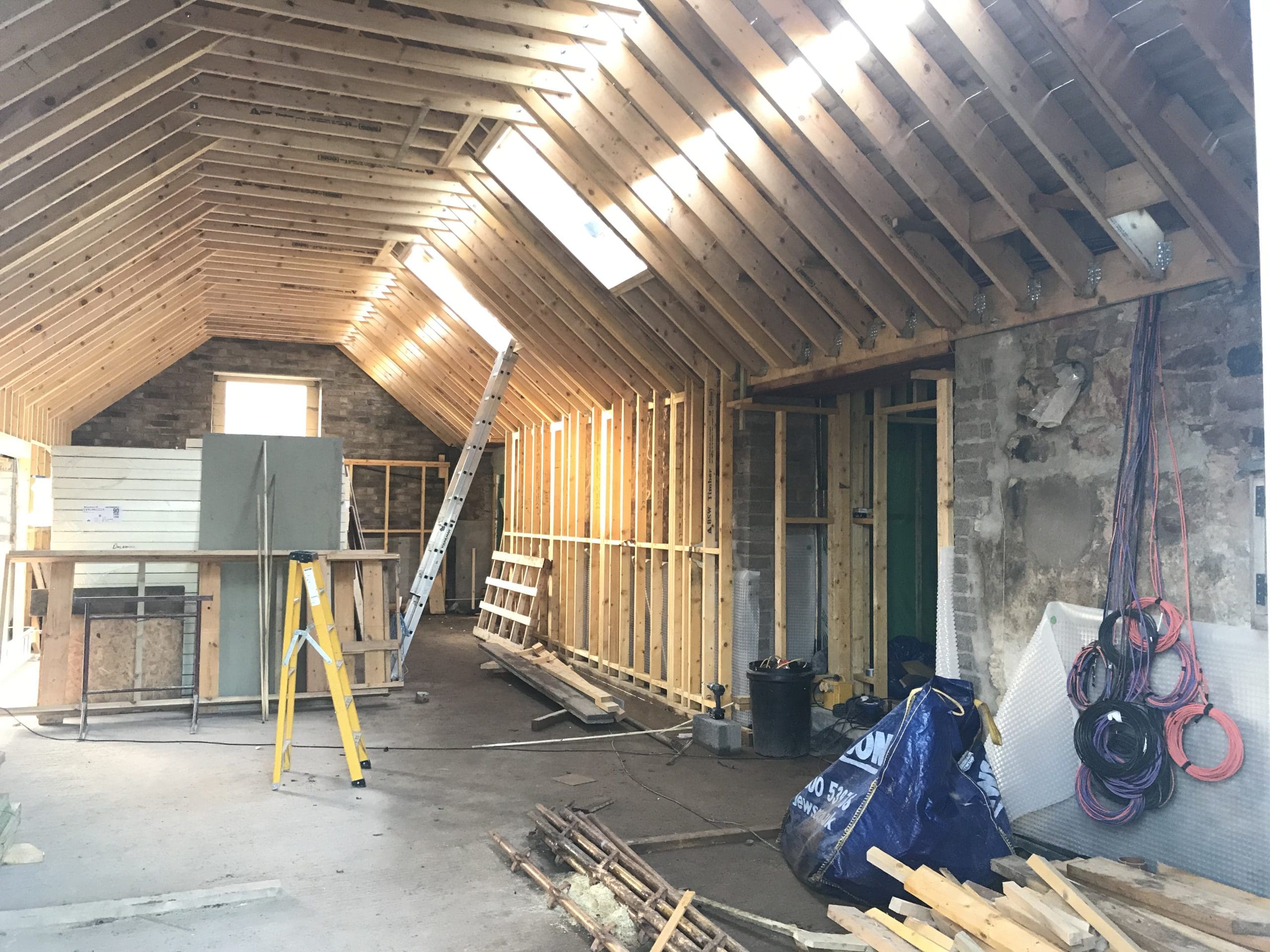
Retrofitting cabling in period properties
Cabling a Victorian house is not the same as cabling a new build. Floors are heavier. Walls are thicker. Conservation rules constrain where cables can run. The temptation is to give up and rely on Wi-Fi for everything. The result is the smart home problems we cover on the Networking page.
In our retrofits we use service voids, redundant chimney runs, existing electrical chases and the back of skirting wherever we can. We talk to the conservation officer before quoting on listed work. We agree every visible socket position with you in advance.
The cabinet matters
The rack or cabinet is where the network lives. We design it as part of the cabling brief, not as an afterthought. It needs power on its own circuit, airflow so the equipment does not overheat, and access so future trades can work in it. It needs proper patch panels with labels that match the drawings, and it needs documentation handed to you on completion.
We have seen too many "server cupboards under the stairs" that turn into firetraps. The cabinet matters because everything else depends on it.
Frequently asked questions
Can you cable an occupied home?
Yes. It takes longer and it is more disruptive than first fix on a new build, but we work room by room and tidy up at the end of each day.
How disruptive is first fix on a new build?
Not very, if it is planned. We run alongside the electrical first fix on dates the main contractor sets. The build does not wait for us if we have the schedule in advance.
Cat6 or Cat6a, which do I actually need?
Cat6a as standard now. The difference in cost is small and the difference in capability for the next decade is large.
Do I need fibre in a domestic property?
Sometimes. Long runs between buildings, between floors in larger homes, or where future bandwidth matters. We will tell you honestly if it is overkill for your property.
What documentation do I get at handover?
Cable schedule, patch panel labelling, rack drawings, and a single-page reference for the cupboard so the next trade understands the system at a glance.
Thinking of adding smart home technology? Book a consultation to discuss your project.
A 20 minute, no-obligation consultation. We will give you our honest view on what fits your home.